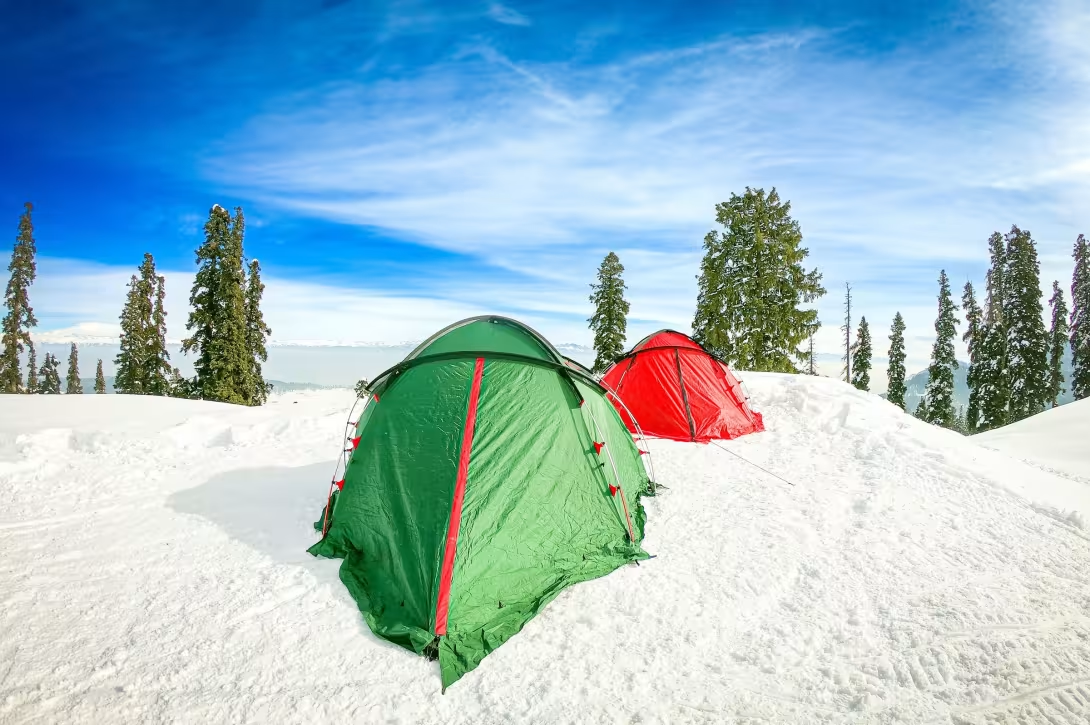
Your first night on snow is mostly a lesson in moisture. Cold on its own is easy: add insulation until you are warm. The trouble starts when you sweat on the way up, stop at camp in damp clothes, and the wind finds every wet patch. By the time the stove is lit you are shivering, and the night has not even started.
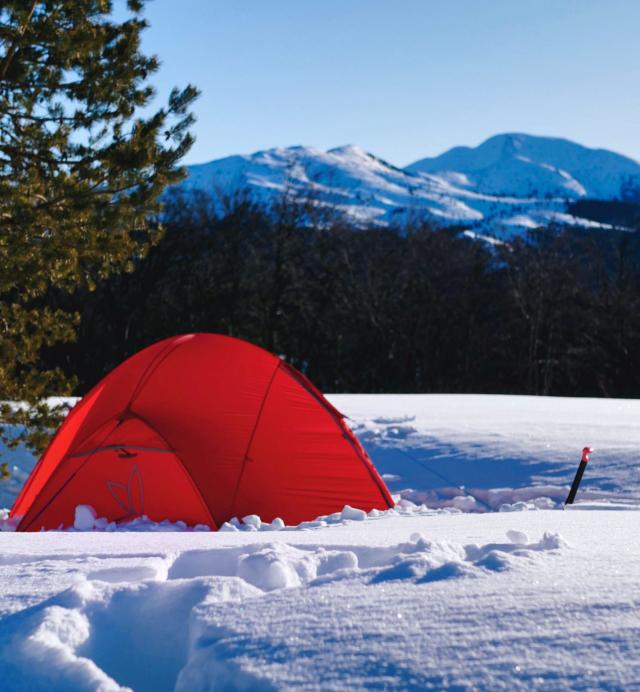
Layering solves this, not by making you warmer, but by letting you stay dry at every stage of the day. Here is the system we use for a first winter camp, like a January night in the fir forest near Ardıç on the slopes of Erciyes, where the thermometer usually reads between −8 °C and −12 °C at dawn.
Four layers, four jobs
Each layer has one job. When people get cold in winter, it is usually because one layer is trying to do two.
- Base layer: move sweat away. Merino or a synthetic, close to the skin. Never cotton; it holds water and takes hours to dry.
- Mid layer: insulate while moving. A light fleece or grid fleece that breathes. You walk in this one.
- Insulation: keep heat when you stop. A down jacket, worn at every break and all evening at camp. You do not walk uphill in it.
- Shell: block wind and snow. A waterproof, breathable jacket that goes over everything else when the wind picks up.
| Layer | What we wear | Weight | When it is on |
|---|---|---|---|
| Base | Merino long-sleeve top and leggings | 380 g | All day and all night |
| Mid | Grid fleece with half zip | 300 g | Walking in still air |
| Insulation | Doruk Down Jacket | 380 g | Breaks, camp, inside the bag |
| Shell | Fırtına 3L Rain Jacket | 340 g | Wind, snowfall, the ridge |
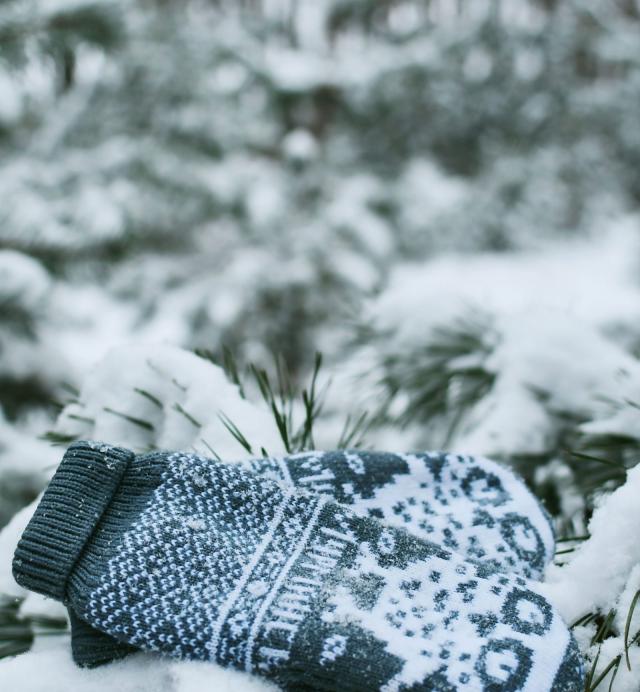
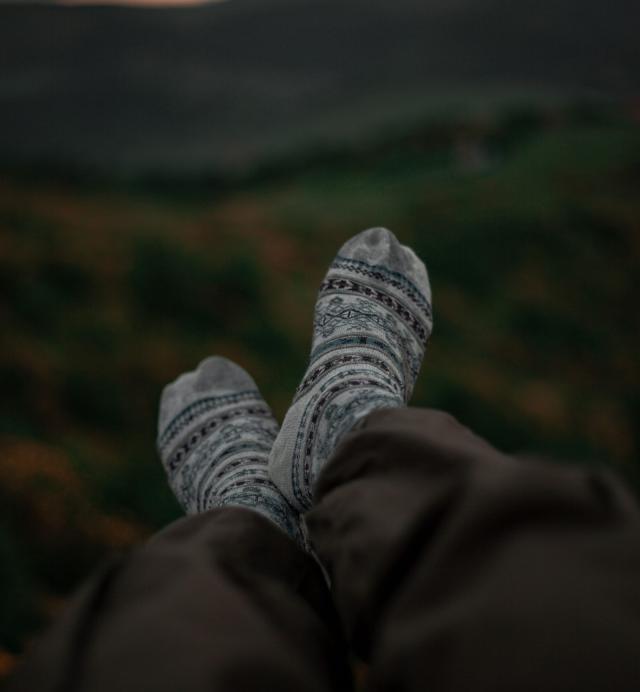
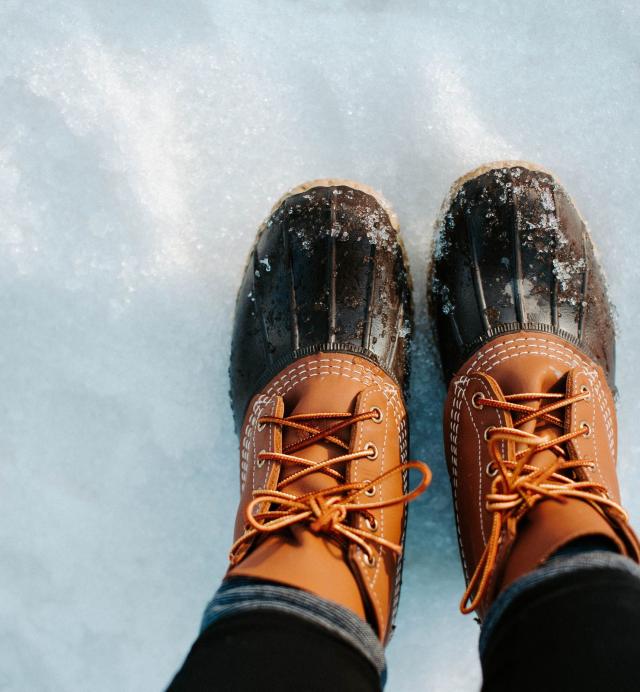
| Hands and feet | Wool gloves, merino socks (two pairs) | 350 g | Always, with a dry pair for sleep |
On the way up: be bold, start cold
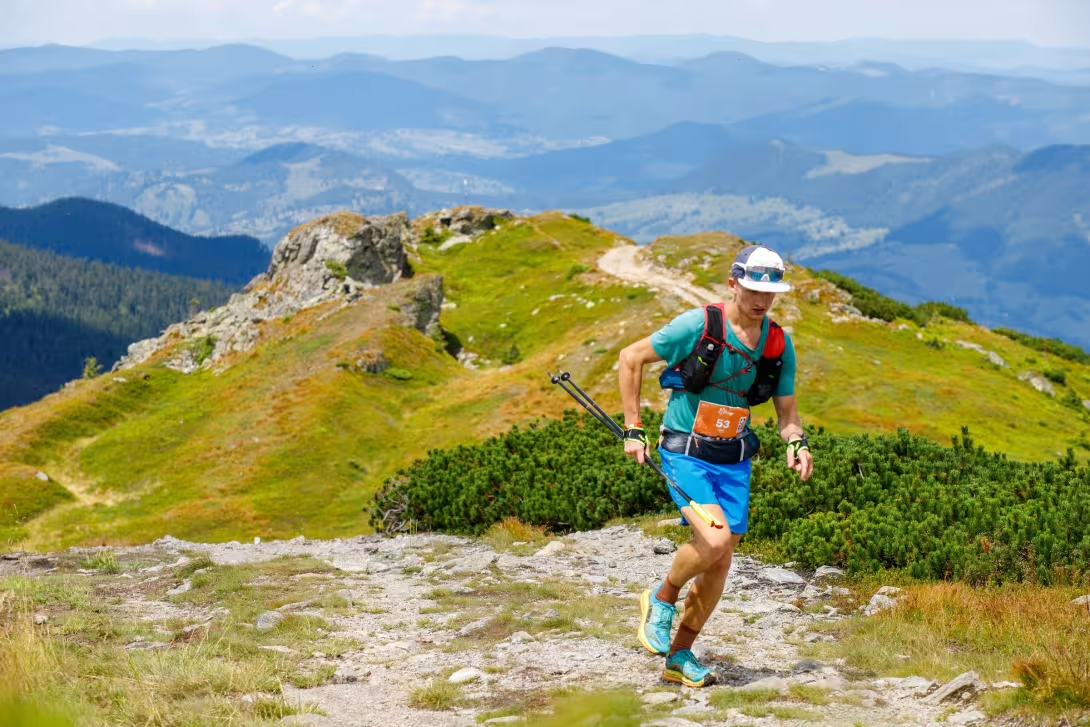
The hardest habit to learn is starting the walk slightly cold. Stand at the car in base layer and fleece, and you will feel underdressed. Ten minutes into the climb, with a 15 kg pack, you will be exactly right. Start in the down jacket and you will be soaked from the inside by the first bend.
Take a layer off before you sweat, and put one on before you shiver. Everything else is detail.
The only winter rule we teach on day one
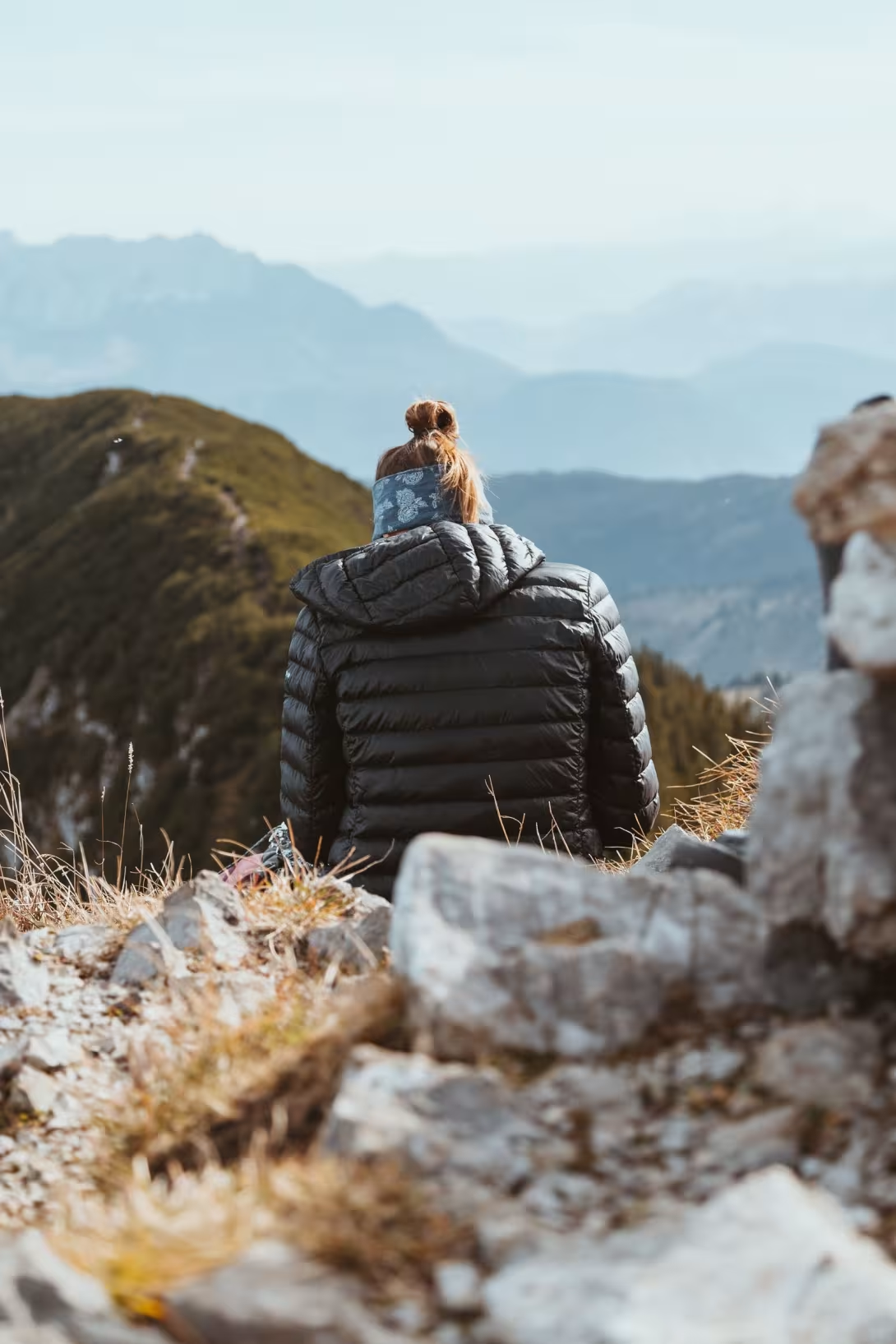
At every stop longer than two minutes, the down jacket goes on over everything, shell included if it is windy, and comes off again before you start moving. Put it on even when you do not feel cold yet. You are holding on to heat you already have, not trying to win it back.
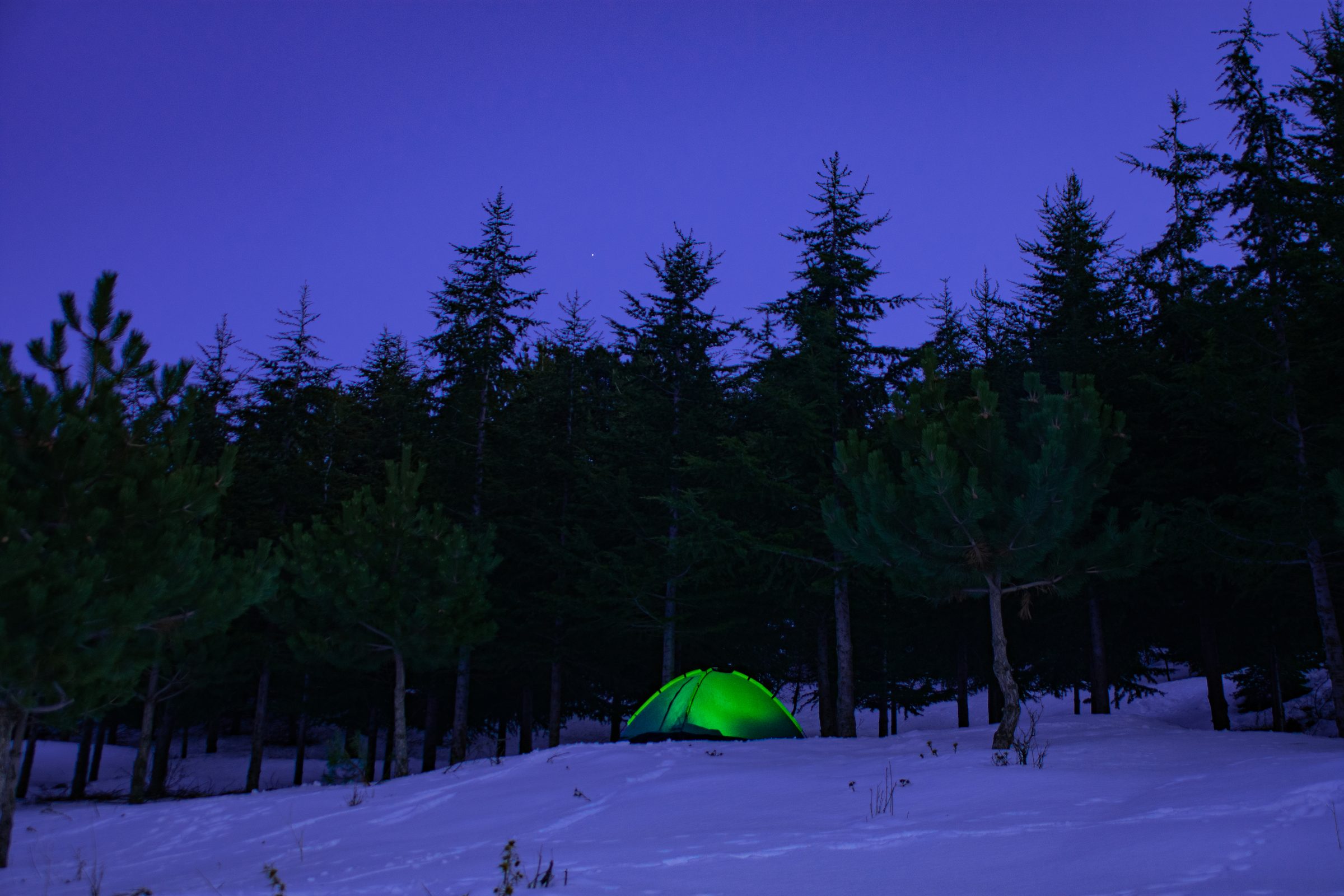
At camp: change before you cool
Arriving at camp is the coldest moment of a winter day, because you stop making heat while you are at your dampest. The order matters:
- Down jacket on straight away, over the damp layers, before you even take the pack off.
- Pitch the tent, then get inside and swap the damp base top for a dry one. It takes a minute and buys you the evening.
- Dry socks on, and keep the wet pair inside your jacket or the sleeping bag so they are not frozen solid by morning.
- Melt snow for water while you still have daylight. It takes longer than you think: about an hour for three litres on one stove.
The night: a system, not just a bag
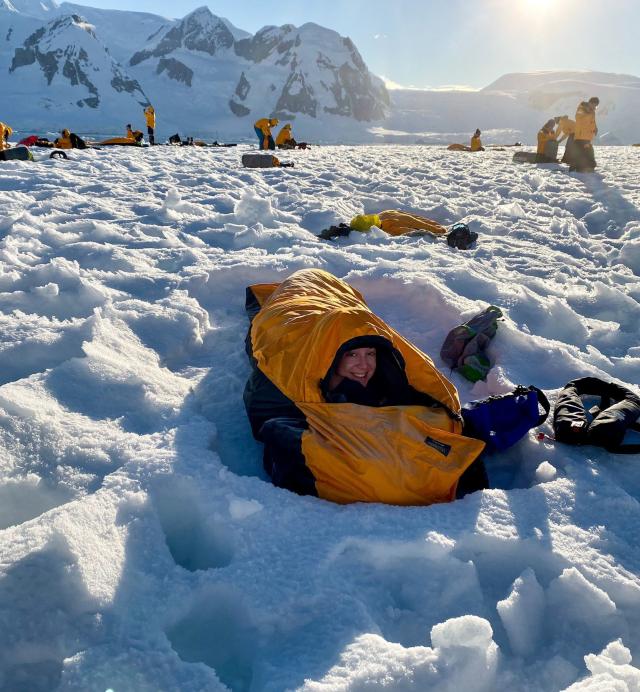
For −10 °C we take the Buzul −18, whose comfort rating of −11 °C sits right where the night lands. Under it go two mats: a closed-cell foam pad on the snow and the Kuşluk R4.2 on top, together around R6. Most cold winter nights come from the ground, not the air.
Eat a hot dinner with some fat in it, and drink something warm. Fill a steel bottle with hot water, close it tight, and put it in the footbox. Sleep in the dry base layer and a hat; keep the down jacket either on, if the bag has room, or spread over the top of the bag. Keep your breath outside the hood, or the moisture ends up in the down by morning.
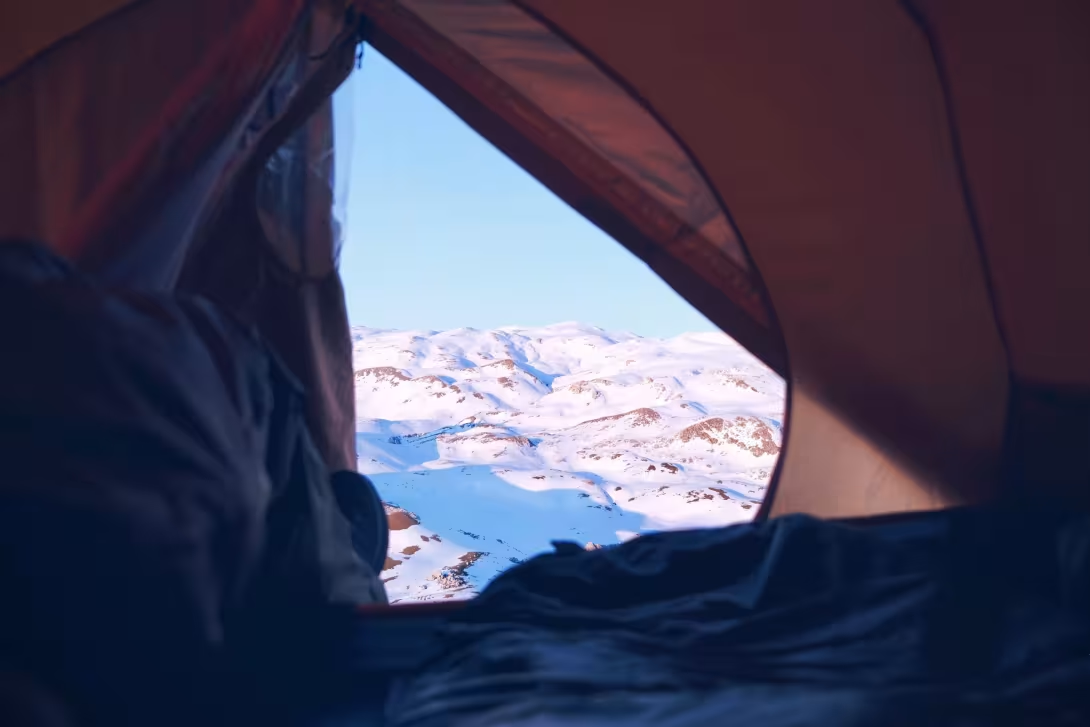
If you wake cold at three, eat something, do twenty sit-ups inside the bag, and pee. A full bladder costs heat. Then go back to sleep: dawn on snow is worth the night it took to get there.
2 comments
Do you sleep with the boot liners inside the bag too? Mine froze stiff at Ardıç last February.
In reply to Do you sleep with the boot liners inside the bag too? Mine froze by Selin A. (not verified)
We do, in a stuff sack by the feet so they stay dry. Warm liners in the morning make the first hour much easier.